
Your vocal cords (also called vocal folds) are the tiny muscles in your throat that create your voice — from speaking to singing to laughing.
But after years of working with singers and voice users, I’ve learned something important:
Most vocal problems don’t come from “bad vocal cords.” They come from misunderstanding how the vocal cords actually work.
Once people understand how vocal cords vibrate, stretch, relax, and respond to airflow, their voice often improves faster, with less strain and more control.
This guide explains how vocal cords work step-by-step, using clear science, simple language, real coaching experience, and practical insight so you don’t just read — you actually understand and feel how your voice works.
If you want to observe how your voice responds in real time, you can start with a singing range testing tool.
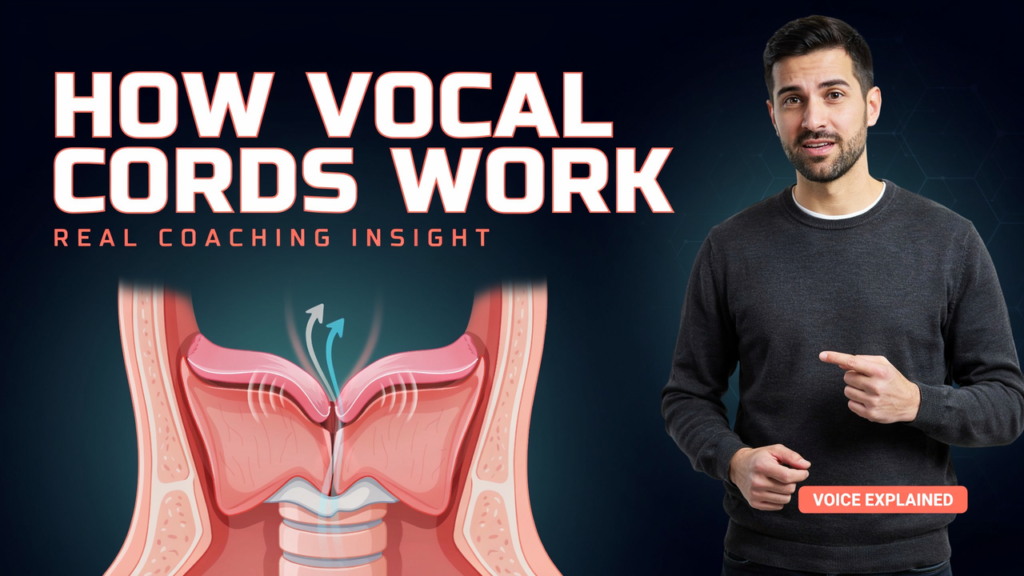
How Vocal Cords Work
Vocal cords work by coming together and vibrating when air flows from the lungs.
The speed of vibration controls pitch, airflow controls volume, and the mouth shapes the final sound.
Air = power. Vocal cords = vibration. Mouth = tone.
What Are Vocal Cords?
Vocal cords are two soft bands of muscle inside the larynx (voice box).
They:
- Open when you breathe
- Close and vibrate to make sound
- Stretch to create high notes
- Relax to create low notes
A helpful analogy I often use when teaching singers:
Vocal cords work like two soft rubber bands — airflow makes them vibrate and create sound.
They don’t create sound on their own.
Breath is the engine. Vocal cords are the vibrating strings.
Use the breath stamina tool to push phrase length.
Step-by-Step: How Vocal Cords Produce Sound
Here’s what happens every time you speak or sing:
- You inhale air into your lungs
- Air travels upward through the windpipe (trachea)
- Vocal cords move toward each other
- Air pushes through, causing them to vibrate
- Vibrations create sound waves
- Your throat, mouth, and tongue shape the sound into words or singing
This process is called phonation.
Real Coaching Insight
Many beginners believe they must push harder to make sound — but in practice:
Sound improves when airflow is balanced, not forced.
What Happens Inside Your Throat When You Sing or Speak?
When vocal cords vibrate:
- Faster vibration = higher pitch
- Slower vibration = lower pitch
- Stronger airflow = louder sound
- Balanced airflow = clearer tone
Coaching Reality
One of the most common mistakes I see:
Singers try to force high notes, when high notes actually require lighter, faster vibration — not more pressure.
How Vocal Cords Change Pitch (High vs Low Notes)
Low Notes
- Vocal cords are thicker and relaxed
- They vibrate slowly
- Sound feels deeper and heavier
High Notes
- Vocal cords become thinner and stretched
- They vibrate faster
- Sound feels lighter and brighter
A comparison that helps singers understand:
- Low notes = thick guitar string
- High notes = tight thin guitar string
The goal is coordination — not force.
Loudness vs Power (Why Forcing Hurts Your Voice)
Loudness comes from:
- Breath control
- Airflow efficiency
- Balanced vocal cord closure
Not from throat tension.
When singers push too hard:
Vocal cords slam together
Tone becomes strained
Fatigue increases
Risk of hoarseness rises
Healthy loudness feels supported — not painful.
If breath control is a challenge, explore breathing techniques for singers.
How Vocal Cords Work in Singing vs Speaking
| Function | Speaking | Singing |
|---|---|---|
| Pitch range | Narrow | Wide |
| Vocal cord flexibility | Medium | High |
| Breath control | Basic | Advanced |
| Precision | Moderate | Very high |
Real Experience
Singers train their vocal cords to:
- Vibrate more smoothly
- Adjust pitch faster
- Stay relaxed under pressure
You can track pitch control using a pitch accuracy test.
Vocal Registers Explained (Chest, Head Voice & Falsetto)
Vocal cords change shape depending on register:
Chest Voice
- Thicker vocal fold vibration
- Strong, speech-like sound
- Common in lower notes
Head Voice
- Thinner vibration
- Lighter tone
- Used for higher notes
Falsetto
- Partial vocal fold contact
- Airier sound
- Used for soft high notes
Coaching Insight
Many singers struggle with high notes because they try to keep chest-voice thickness instead of allowing the vocal cords to thin.
Range improves when coordination changes — not when force increases.
How Airflow & Breath Support Affect Vocal Cords
Vocal cords rely on airflow from the lungs.
If airflow is:
- Too weak → tone becomes breathy
- Too strong → cords strain
- Balanced → tone becomes clear and free
Healthy singing feels like:
Air moving smoothly — not being pushed aggressively.
What Causes Vocal Cord Strain?
Vocal cords strain when:
You shout or yell
You sing with tension
You whisper excessively
You sing without warming up
You push high notes
If you’ve wondered about whispering, see does whispering strain your voice.
How Vocal Cords Heal & Recover
Vocal cords recover best with:
- Hydration
- Vocal rest
- Gentle humming
- Light warm-ups
- Reduced tension
A structured daily vocal warm-up routine helps keep them flexible.
Real Coaching Experience: What Actually Improves Vocal Cord Function
After coaching many singers, the fastest improvements happen when they:
- Reduce throat tension
- Improve breath efficiency
- Practice gentle pitch slides
- Warm up consistently
- Focus on ease, not loudness
The best vocal cords aren’t the strongest — they’re the most coordinated.
If you want to monitor vocal stability, try a singing note detector.
Common Myths About Vocal Cords
Myth 1 — Vocal cords should feel powerful
Truth: They should feel free, flexible, and responsive
Myth 2 — Louder means stronger
Truth: Efficiency matters more than volume
Myth 3 — High notes require pushing
Truth: High notes require lighter vibration
How to Keep Vocal Cords Healthy Long-Term
Daily habits that protect your voice:
- Drink water regularly
- Avoid yelling
- Warm up before singing
- Rest when hoarse
- Practice relaxed breathing
More guidance in vocal health tips.
Emotional Truth: Why Understanding Vocal Cords Changes Singers
Many singers feel:
“My voice just isn’t built for this.”
But once they understand how vocal cords work, they often realize:
“I wasn’t limited — I just didn’t understand how to use my voice.”
Knowledge builds:
Confidence
Control
Vocal freedom
Faster progress
Frequently Asked Questions
How do vocal cords work?
They vibrate when air passes through them, creating sound.
How do vocal cords produce sound?
Air pushes the cords together, causing vibration that becomes sound waves.
How do vocal cords change pitch?
They stretch thinner for high notes and relax thicker for low notes.
What happens to vocal cords when singing?
They vibrate more precisely to control pitch, tone, and volume.
Can vocal cords be damaged?
Yes — by yelling, forcing sound, or poor technique.
How do vocal cords heal?
Through hydration, rest, and gentle vocal exercises.
Do vocal cords get stronger with training?
They become more coordinated and efficient, not just stronger.
Vocal cords work best when they are relaxed, supported by airflow, and allowed to vibrate freely.
Great voices aren’t built by force — they’re built by coordination, breath efficiency, and healthy technique.
If you want to understand and track how your voice responds over time, Check your range online at https://singingrangetest.com/ and build real awareness of your vocal cords in action.

Cooke is a vocal training and singing education writer specializing in vocal range analysis, pitch recognition, voice development, and singing tools for vocalists, performers, musicians, and beginners. He creates practical content focused on vocal improvement, singing techniques, and voice analysis resources.