
Layne Staley’s vocal range is commonly cited as approximately E2 to G5, spanning around three octaves. He is often classified as a baritone with a strong upper extension, capable of intense high belts and gritty distortion while maintaining mid-range depth.
Range alone doesn’t explain his sound. Technique and tonal weight do.
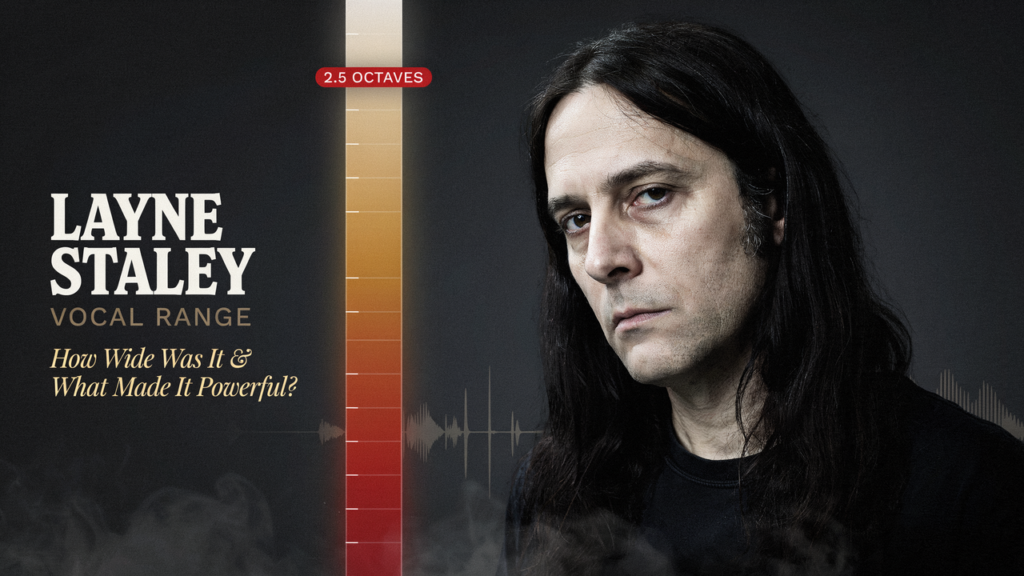
What Was Layne Staley’s Actual Vocal Range?
Most documented performances place his lowest notes around E2 and his higher sustained notes near G5, with some screamed peaks reaching higher depending on interpretation.
That gives him a solid three-octave span.
However, it’s important to separate:
- Supported singing range
- Distorted or screamed extremes
- Comfortable tessitura
You can visualize where these notes sit using a structured vocal range chart to understand male voice boundaries.
His most consistent performance zone sat higher than many traditional baritones, which is why classification debates exist.
Was Layne Staley a Tenor or Baritone?
He is most commonly described as a baritone with strong upper extension.
Why Baritone Fits
- Deep speaking voice
- Full lower register
- Strong chest resonance
- Weight in mid-range notes
If you compare structural limits, the baritone vocal range aligns closely with his lower and middle voice.
Why Some Call Him a Tenor
He could sing high belts.
He sustained upper notes with intensity.
His live tessitura often sat in the upper mid-range.
But high capability does not automatically equal tenor classification. Tessitura matters more than isolated peaks.
For clarity on how voice types are determined, reviewing voice types explained helps separate label from extension.
Range vs Tessitura: The Critical Difference
Range is the outer boundary.
Tessitura is where you live vocally.
Think of range like how far you can jump once.
Tessitura is how far you can comfortably walk all day.
Layne’s tessitura often hovered in a strong mid-to-upper baritone zone, especially in live performances.
If you’re unsure of your own structure, start by learning how to find your vocal range before assuming a category.
How He Achieved High, Gritty Notes
His signature sound came from intensity and controlled distortion — not just raw force.
Chest-Dominant Mix
He blended chest voice with head resonance. That created power without fully flipping into a light head voice.
If you’re unclear how registers interact, this guide on chest voice vs head voice explains how mix develops.
Vocal Compression
Compression narrows airflow slightly, allowing louder sound without excessive air escape.
Done properly, this creates edge. Done poorly, it causes strain.
Controlled Distortion
Grit does not mean screaming from the throat. It typically involves controlled false-fold engagement layered over supported pitch.
Distortion should sit on top of stable tone — not replace it.
Live vs Studio Differences
Studio recordings allow multiple takes and vocal rest between phrases.
Live grunge performances require stamina, emotional delivery, and sustained projection.
Some extreme highs appear more frequently in studio settings than on tour.
When analyzing any rock vocalist, distinguish between:
| Category | Meaning |
|---|---|
| Absolute Range | Lowest to highest note ever produced |
| Supported Range | Notes sustained with control |
| Tessitura | Most comfortable performance zone |
This distinction prevents exaggerated octave claims.
If you need tonal structure, open the scale finder first.
How to Build Rock Power Safely
If you’re inspired by his intensity, follow a structured approach.
- Strengthen clean mid-range singing first.
- Develop mixed voice before adding grit.
- Practice controlled volume increases without tension.
- Add light distortion only after pitch stability is consistent.
- Stop immediately if you feel pain or throat pressure.
Never build distortion on an unstable foundation.
You can test pitch control with tools like a pitch accuracy test before layering power.
What Healthy High Belts Should Feel Like
- Supported from below
- Open throat sensation
- Resonance forward in the mask
- No sharp pain or burning
If discomfort appears, reset.
Are You a Baritone?
Ask yourself:
- Does your voice feel strongest in lower mid-range songs?
- Do very high notes require effort and coordination?
- Is your speaking voice moderately low?
- Do low notes feel grounded and full?
If yes, you may lean baritone structurally.
Range extension does not redefine voice type.
Common Mistakes When Analyzing Layne Staley’s Range
Mistake 1: Confusing Scream With Pitch Range
A distorted scream does not always equal a fully supported sung note.
Mistake 2: Overestimating Octave Claims
Some online estimates count unstable peaks.
For context on exaggerations, reviewing common vocal range myths helps separate fact from hype.
Mistake 3: Forcing Grit Too Early
Adding distortion before building mix creates tension.
Mistake 4: Ignoring Breath Support
High intensity without airflow control leads to fatigue.
Developing Intensity Without Damaging Your Voice
Rock singing requires resilience.
Focus on These Foundations
- Steady diaphragmatic support
- Relaxed jaw and tongue
- Gradual range expansion
- Proper warm-ups
Intensity should feel supported, not squeezed.
If you want a clearer structural reference point, reviewing the male vocal range helps you understand how your voice compares anatomically.
Think of distortion like adding spice to food.
Too much too soon overwhelms the dish.
Used carefully, it enhances flavor.
Realistic Expectations About His Range
Three octaves with strong upper extension is impressive, especially in high-intensity rock.
But what made his voice iconic was:
- Emotional delivery
- Dynamic contrast
- Grit layered over pitch
- Strong mid-range foundation
Range size alone doesn’t create impact.
Control and authenticity do.
The Real Lesson From His Vocal Profile
Layne Staley shows how a baritone can develop a powerful upper extension without abandoning depth.
The takeaway:
- Build clean coordination first
- Develop mix before distortion
- Respect your tessitura
- Avoid chasing extreme notes prematurely
Power comes from stability.
Grit sits on top of structure.
Master the structure first.
FAQs
1. What was Layne Staley’s vocal range?
His range is commonly cited as approximately E2 to G5. His usable performance range was slightly narrower than his absolute extremes.
2. Was Layne Staley a tenor or baritone?
He is generally classified as a baritone with strong upper extension. His mid-range depth supports that classification.
3. How many octaves could he sing?
Around three octaves, depending on how extreme notes are counted.
4. What was his highest recorded note?
His highest sustained notes were often around G5, with occasional higher distorted peaks in certain performances.
5. Did his distortion damage his voice?
Distortion itself is not automatically damaging, but excessive tension and fatigue can cause issues. Safe technique requires coordination and recovery.
6. Can I train to sing gritty high notes safely?
Yes, but only after developing stable mixed voice and breath support. Adding grit too early increases strain risk.
7. How do I know my true usable range?
Measure across multiple sessions and count only notes that feel supported and sustainable. Avoid including strained or unstable pitches.

Cooke is a vocal training and singing education writer specializing in vocal range analysis, pitch recognition, voice development, and singing tools for vocalists, performers, musicians, and beginners. He creates practical content focused on vocal improvement, singing techniques, and voice analysis resources.