
Matt Bellamy’s vocal range is commonly cited as approximately A2 to A5, spanning around three octaves, with occasional higher falsetto peaks. He is generally classified as a high tenor known for powerful belts, dramatic falsetto, and strong upper extension in rock settings.
Range numbers are impressive.
But coordination is what makes them usable.
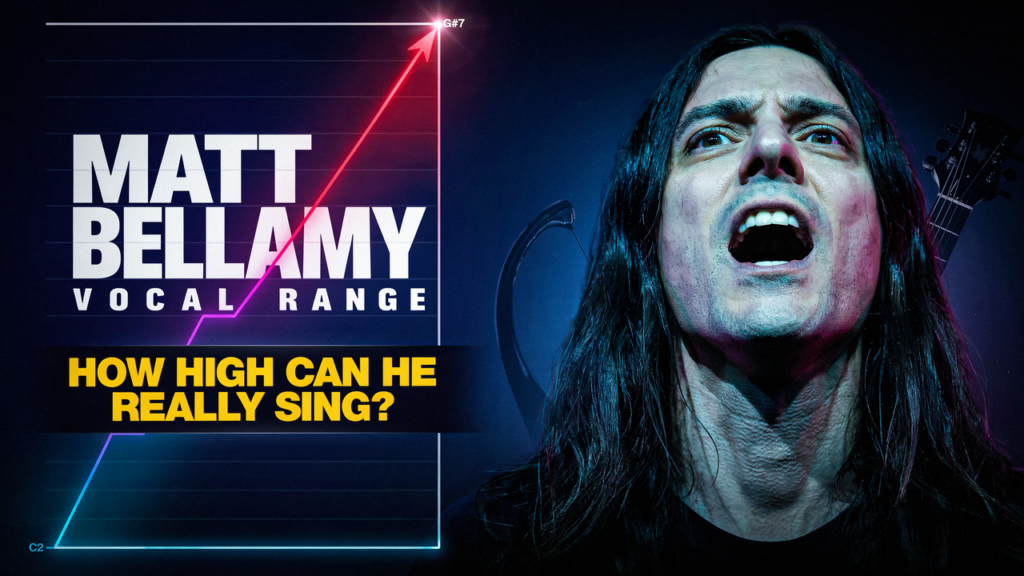
What Is Matt Bellamy’s Actual Vocal Range?
Most documented performances place his lowest notes around A2 and his higher sustained full-voice notes near F#5–A5, depending on live versus studio context.
Some falsetto peaks extend beyond that, but extreme notes don’t always represent sustained, supported singing.
When evaluating any singer, separate:
- Absolute lowest and highest notes
- Consistently supported performance notes
- Comfortable tessitura
If you want to see how these notes compare structurally, a clear vocal range chart helps put those numbers in perspective.
His strongest and most frequently used notes sit high for a male voice.
Is Matt Bellamy a Tenor?
Yes, he is widely considered a high tenor.
Why Tenor Fits
- Comfortable upper-mid singing
- Frequent sustained notes above C4
- Bright resonance in high belts
- Strong head voice and falsetto
The tenor vocal range aligns closely with his tessitura.
He does not display the weight or low-center dominance typical of a baritone.
To understand how classifications work structurally, reviewing voice types explained clarifies why high note ability alone isn’t the deciding factor — comfort zone is.
Range vs Tessitura: The Real Difference
Range is how far you can go.
Tessitura is where you live.
Think of range like a ladder.
Tessitura is the step you stand on most of the time.
Matt Bellamy’s tessitura sits high, often hovering in the upper tenor zone during performances.
If you’re unsure where your own voice naturally sits, start by learning how to find your vocal range accurately.
How He Reaches Those Extreme High Notes
His high notes aren’t random bursts of effort. They rely on coordination.
Mixed Voice Power
Mixed voice blends chest and head resonance, allowing strong high notes without shouting.
Understanding chest voice vs head voice helps you see how this blend prevents strain.
Compression and Airflow Control
High rock belts require controlled airflow.
Too much air causes instability.
Too little creates squeeze.
He balances pressure and release carefully.
Falsetto for Extension
Falsetto provides lighter, thinner cord closure. He uses it strategically for dramatic effect and range extension.
Falsetto is not weakness — it’s a tool.
Use the scale practice tool to improve key fluency.
Live vs Studio Range
Studio recordings allow precision and multiple takes.
Live singing demands endurance and breath control.
Some extreme peaks appear more frequently in studio performances, while live singing reflects stamina management.
Here’s how to think about it:
| Category | Meaning |
|---|---|
| Absolute Range | The furthest notes ever produced |
| Supported Range | Notes consistently controlled |
| Tessitura | Most comfortable performance zone |
This distinction prevents exaggerated “four-octave” assumptions.
Building High Tenor Extension Safely
If you’re inspired by his range, build it properly.
- Strengthen your mid-range first with steady breath support.
- Practice gentle slides into head voice without pushing.
- Develop mixed voice coordination before increasing volume.
- Add high belts gradually, not all at once.
- Only experiment with falsetto after your pitch stability improves.
Before pushing your top notes, test your consistency with a structured pitch accuracy test. High notes are useless if they’re unstable.
Healthy High Notes Should Feel Like
- Supported from below
- Lifted rather than forced
- Jaw and tongue relaxed
- No sharp throat discomfort
Pain is a stop sign, not a challenge.
Are You a High Tenor?
Ask yourself:
- Do notes above C4 feel accessible?
- Does your voice brighten as you ascend?
- Are low notes usable but not dominant?
- Is your speaking voice moderately high?
If yes, you may lean toward high tenor tendencies.
Avoid counting strained screams as part of your real range.
Common Mistakes When Analyzing Matt Bellamy’s Range
Mistake 1: Confusing Falsetto With Belt
Falsetto and belt use different mechanisms. High falsetto does not equal powerful chest-dominant singing.
Mistake 2: Chasing Extreme Notes Too Soon
Trying to hit A5 without mastering C5 creates tension patterns that are hard to undo.
Mistake 3: Overestimating Octave Claims
Some online estimates include unstable peaks. For clarity, reviewing common vocal range myths helps separate exaggeration from structure.
Mistake 4: Ignoring Stamina
High notes require endurance. Without breath support, they fade quickly.
Developing Rock-Style High Notes Safely
Rock singing demands resilience.
Focus on These Foundations
- Diaphragmatic breath support
- Smooth register transitions
- Gradual range expansion
- Consistent warm-ups
Think of building high notes like training for a sprint.
You don’t start at full speed.
You condition first.
High extension should feel energized, not squeezed.
If you want context for where your voice sits structurally, reviewing the broader male vocal range overview helps anchor expectations.
Realistic Expectations About His Range
Three octaves with strong upper extension is impressive.
But what makes his voice stand out is:
- High tessitura comfort
- Dramatic dynamic control
- Strong mix coordination
- Emotional intensity
Range width alone does not create impact.
Control and musicality do.
The Real Lesson From His Vocal Profile
Matt Bellamy demonstrates how a high tenor can build extreme upper extension without abandoning structure.
The key principles:
- Develop mix before belt
- Respect your passaggio
- Strengthen mid-range stability
- Expand gradually
Extreme notes are the result of coordination — not brute force.
Build stability first.
Power comes second.
FAQs
1. What is Matt Bellamy’s vocal range?
His range is commonly cited as approximately A2 to A5, with additional falsetto peaks depending on the performance.
2. Is Matt Bellamy a tenor?
Yes, he is generally classified as a high tenor based on his tessitura and upper-register comfort.
3. How many octaves can he sing?
Around three octaves in supported performance, with occasional higher falsetto notes.
4. Does he use falsetto?
Yes, he uses falsetto strategically for extension and stylistic contrast.
5. What is his tessitura?
His tessitura sits in the upper tenor range, where he frequently sustains notes in performance.
6. Can I train to sing that high?
Yes, but it requires gradual development of breath support and mixed voice coordination. Rushing high notes increases strain risk.
7. Are extreme high notes necessary to be a great singer?
No. Musical expression, control, and consistency matter more than hitting the highest possible pitch.

Cooke is a vocal training and singing education writer specializing in vocal range analysis, pitch recognition, voice development, and singing tools for vocalists, performers, musicians, and beginners. He creates practical content focused on vocal improvement, singing techniques, and voice analysis resources.