
Michael Bublé’s vocal range is commonly cited as approximately C3 to C5, spanning around two octaves, with occasional notes slightly above in head voice. He is generally classified as a lyric baritone known for warm low notes, smooth phrasing, and controlled upper extension rather than extreme high belts.
Range is only part of the story.
Control and tone placement matter more.
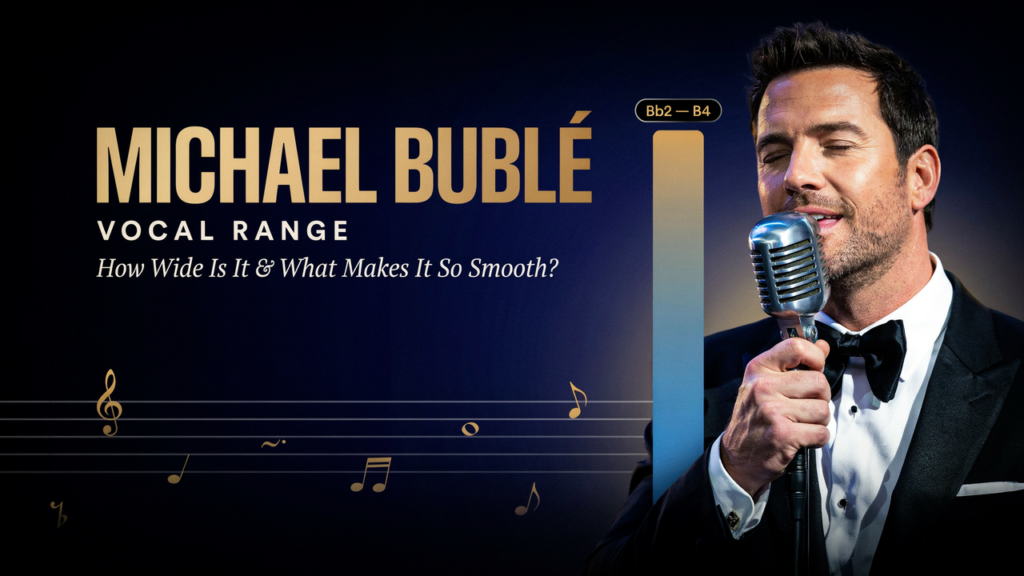
What Is Michael Bublé’s Actual Vocal Range?
Most documented performances place his lowest consistent notes around C3 and his higher sustained notes near B4–C5, with occasional higher head voice passages.
That gives him a practical two-octave performing span.
He is not known for extreme whistle notes or aggressive high belts. Instead, he specializes in smooth, supported phrasing within his comfort zone.
If you want to compare these notes structurally, reviewing a male vocal range guide helps you see where baritone territory sits.
Is Michael Bublé a Baritone or Tenor?
He is most commonly described as a lyric baritone.
Why Baritone Fits
- Warm, resonant lower register
- Strong mid-range presence
- Comfortable singing around A3–E4
- Smooth rather than bright upper tone
The baritone vocal range aligns closely with where his tessitura lives.
Why Some Think He’s a Tenor
He can sing up to C5.
He occasionally uses head voice above his chest range.
But hitting a C5 does not automatically make someone a tenor. Classification depends on where the voice feels natural and sustainable.
If you want a deeper understanding of voice categories, reviewing voice types explained helps separate tone color from structural placement.
Range vs Tessitura: What Really Matters
Range is the full distance between your lowest and highest notes.
Tessitura is the range you use most comfortably.
Think of range like owning a large house.
Tessitura is the room you actually live in.
Michael Bublé’s tessitura sits comfortably in the mid-baritone range, which gives his voice warmth and stability.
If you’re unsure where your own voice sits, start by learning how to find your vocal range properly.
How He Sings High Notes Softly Without Strain
His upper notes don’t sound forced. That’s intentional.
Breath Management
Crooner-style singing requires steady airflow, not excessive volume. He controls air pressure carefully, allowing tone to float rather than push.
Head Voice and Mix
He uses a light mix or head voice to access upper notes smoothly. Understanding chest voice vs head voice makes it clear how he transitions without cracking.
Legato Phrasing
Legato means connecting notes seamlessly. His tone flows like a smooth ribbon rather than jumping between pitches.
Before trying to imitate this softness, check your pitch consistency using a simple pitch accuracy test. Smoothness requires stable pitch.
Live vs Studio Range
Studio singing allows retakes and ideal acoustics.
Live performance demands breath control and endurance.
He rarely pushes beyond his comfortable zone in concerts, which protects vocal stamina and keeps tone consistent.
Here’s a helpful breakdown:
| Category | Meaning |
|---|---|
| Absolute Range | Lowest and highest note ever produced |
| Supported Range | Notes sung consistently with control |
| Tessitura | Most comfortable singing zone |
This keeps expectations realistic.
How to Build Smooth Baritone Control
If you want to develop a similar warm, crooner-style tone, follow this progression:
- Strengthen your mid-range with relaxed, sustained vowels.
- Practice slow scales focusing on airflow, not volume.
- Develop gentle head voice access above E4 without pushing.
- Blend chest and head voice gradually.
- Add dynamic control before expanding range further.
Smooth singing is about balance, not power.
Healthy Upper Notes Should Feel Like
- Supported from the diaphragm
- Open throat sensation
- Relaxed jaw and tongue
- No squeezing or throat tightness
If you feel pressure building in your throat, reduce intensity immediately.
This scale finder for singers helps you explore patterns.
Are You a Lyric Baritone?
Ask yourself:
- Do your low notes feel rich and comfortable?
- Is your strongest singing zone in the middle of your range?
- Do very high notes require coordination rather than raw power?
- Is your speaking voice moderately low?
If yes, you may lean toward lyric baritone tendencies.
Avoid labeling yourself based on one high note.
Common Mistakes When Analyzing Michael Bublé’s Range
Mistake 1: Assuming Soft Singing Is Easy
Controlled soft singing requires more airflow management than loud belting.
Mistake 2: Confusing Head Voice With Weakness
Head voice is a healthy register, not a fallback.
Mistake 3: Comparing Octaves Instead of Tone
Some singers chase octave counts. For perspective, reviewing common vocal range myths helps clarify why size isn’t everything.
Mistake 4: Ignoring Mid-Range Mastery
His consistency comes from stable mid-range support, not extreme top notes.
Developing Crooner-Style Smoothness Safely
Crooner technique demands control.
Focus on These Foundations
- Steady diaphragmatic support
- Gentle vowel shaping
- Controlled vibrato
- Gradual dynamic variation
Think of your airflow like pouring water from a pitcher.
Too fast and it splashes.
Too slow and it stops.
Smooth singing finds the steady stream.
Avoid over-darkening your tone to imitate someone else. Your voice should feel natural.
Realistic Expectations About His Range
Two solid octaves with strong control is highly effective for jazz and pop.
He does not rely on extreme high notes or vocal gymnastics.
What makes his voice stand out is:
- Warm tone
- Consistent vibrato
- Clean phrasing
- Breath control
Range width does not equal vocal quality.
Control creates longevity.
The Real Lesson From His Vocal Profile
Michael Bublé demonstrates how a baritone can maximize musical impact without chasing extreme highs.
The key principles:
- Respect your tessitura
- Build stable breath support
- Blend registers smoothly
- Expand gradually, not aggressively
A well-supported mid-range can be more powerful than an unstable high note.
Master stability first.
Expansion comes naturally after.
FAQs
1. What is Michael Bublé’s vocal range?
His vocal range is commonly cited as approximately C3 to C5, spanning around two octaves with occasional higher head voice notes.
2. Is Michael Bublé a baritone?
Yes, he is generally classified as a lyric baritone based on his tessitura and tonal warmth.
3. How many octaves can he sing?
He consistently performs within about two octaves in supported singing.
4. Does he use falsetto?
He occasionally uses light head voice or soft upper extension, but not extreme falsetto passages.
5. What is his tessitura?
His tessitura sits in the mid-baritone range, where his tone feels most natural and controlled.
6. Is his range considered large?
It is solid and practical, though not extreme. His strength lies in control and phrasing rather than octave span.
7. Can baritones sing high notes smoothly?
Yes, with proper breath support and gradual training, baritones can develop comfortable upper extension without strain.

Cooke is a vocal training and singing education writer specializing in vocal range analysis, pitch recognition, voice development, and singing tools for vocalists, performers, musicians, and beginners. He creates practical content focused on vocal improvement, singing techniques, and voice analysis resources.