
Conan Gray’s vocal range spans approximately D3 to E5 in modal voice, with additional extension into falsetto above that range. He is generally considered a light tenor, known for expressive head voice, emotional phrasing, and smooth transitions rather than heavy belting or extreme low notes.
Those numbers tell part of the story. The real value is understanding how he uses his voice.
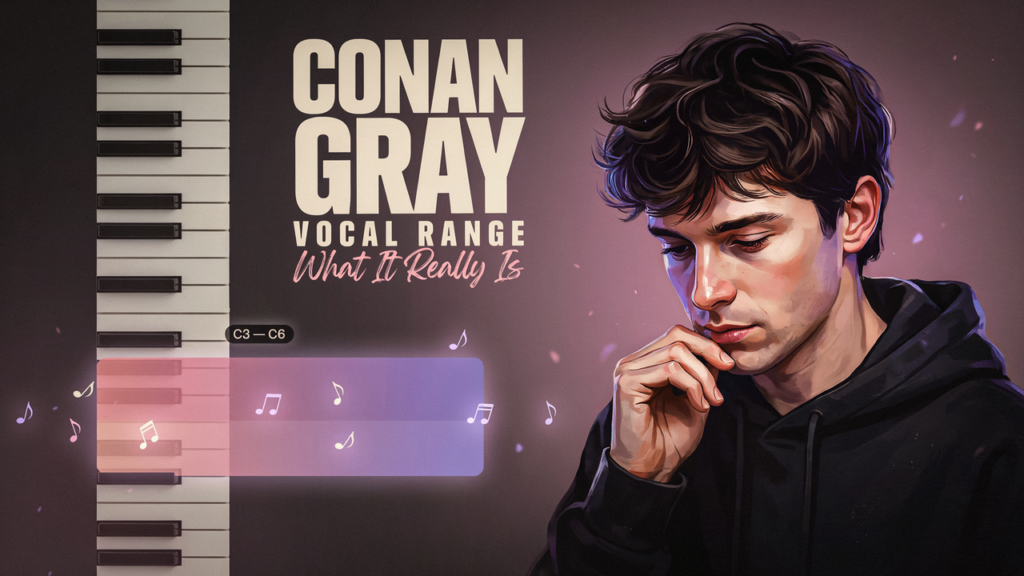
What Is Conan Gray’s Actual Singing Range?
Most documented analyses place his:
- Lowest recorded notes around D3
- Strong upper modal notes around D5–E5
- Falsetto notes extending slightly higher
That gives him roughly two to three octaves, depending on how falsetto is counted.
But range alone doesn’t define a voice.
A singer’s tessitura—their most comfortable and sustainable zone—matters more than their extreme notes. If that distinction is new to you, review what is tessitura before comparing numbers.
Conan Gray’s tessitura often sits in the upper third and fourth octaves, which gives his songs that floating, vulnerable quality.
Is Conan Gray a Tenor?
Yes, he is widely considered a tenor.
Why He Fits the Tenor Category
- Higher natural speaking tone
- Comfortable upper melodies
- Light, bright vocal color
- Frequent use of head voice
If you want a broader context, compare this to the typical tenor vocal range.
He does not have the heavy weight associated with baritones. His voice thrives on agility and emotional tone rather than thickness.
Modal Voice vs Falsetto
One of the biggest misunderstandings around his range is falsetto.
Falsetto is a legitimate register. It expands your total note span. But it feels lighter and functions differently from modal (full) voice.
Here’s a simplified breakdown:
| Category | Approximate Notes |
|---|---|
| Lowest recorded note | D3 |
| Strong modal high note | D5–E5 |
| Falsetto extension | Above E5 |
| Comfortable tessitura | E3–C5 |
If you want to see where your own voice sits, compare with a general male vocal range.
Understanding the difference between modal and falsetto prevents unrealistic comparisons.
How Conan Gray Sings High Notes Without Shouting
He rarely forces chest voice upward.
Instead, he relies on:
- Early transition into head coordination
- Light mix rather than heavy belt
- Steady airflow
- Relaxed jaw and tongue position
If you’re unsure how head and chest registers interact, review chest voice vs head voice.
Think of his high notes like lifting a balloon. The lift comes from airflow, not muscle strain.
Building a Similar Upper Range Safely
If you want to develop a light, expressive upper register like his, follow this progression carefully.
1. Stabilize Your Mid-Range
Your middle voice must feel balanced before you push higher.
If G4 feels unstable, E5 won’t magically work. Strengthen that area first with structured best singing exercises.
2. Develop Easy Head Voice
Head voice should feel like a release, not a squeeze.
Practice sliding upward gently without increasing volume.
3. Blend Through the Passaggio
The vocal break is where tension builds.
Instead of pushing chest voice higher, allow head voice to mix in early. This keeps the tone smooth and reduces strain.
4. Add Intensity Gradually
Volume comes last.
If you can’t sing the note softly, you’re not ready to sing it loudly.
If high notes feel tight, revisit technique using guidance from how to sing higher notes.
Developing Emotional Control Like Him
Conan Gray’s appeal isn’t just pitch height.
It’s emotional delivery.
He often sings slightly breathy phrases, controlled dynamics, and subtle crescendos. This gives intensity without shouting.
Think of it like storytelling. A whisper can be more powerful than a yell.
Try the pitch tracking tool when you’re practicing sustained notes.
Are You Forcing Your High Notes?
Ask yourself:
- Do my shoulders lift when I sing high?
- Does my throat feel tight?
- Can I sustain E4–G4 without strain?
- Do I recover easily the next day?
If the answer suggests tension, step back. You can measure your current limits accurately with an octave range test before pushing further.
Common Mistakes When Comparing Yourself to Conan Gray
Mistake 1: Assuming Falsetto Equals Full Voice
Falsetto expands total range, but it does not mean you can belt those notes.
Mistake 2: Yelling Instead of Mixing
Trying to power through the break leads to fatigue. Light coordination works better.
Mistake 3: Ignoring Vocal Type
If you are a baritone, your tessitura will feel lower. Compare yourself realistically using a vocal range chart.
Mistake 4: Chasing High Notes Too Fast
Range development takes time. Months, not days.
Realistic Expectations
Most male singers have about two comfortable octaves.
If you sit within that span, you are normal. Expanding safely requires consistency, proper technique, and rest.
You can objectively map your span using a vocal range calculator instead of guessing.
Extreme high notes should feel like an extension—not a fight.
What Singers Can Learn From His Style
His strengths include:
- Smooth register transitions
- Light upper resonance
- Controlled breath
- Emotional phrasing
He doesn’t try to overpower the song. He leans into clarity.
That approach keeps the voice sustainable over time.
Final Coaching Perspective
Conan Gray’s vocal range spans roughly D3 to E5 in modal voice, with falsetto extending higher. He fits within the tenor category, relying on head voice and mix rather than heavy belting.
If you want to grow your own range, focus on balance, coordination, and patience.
Range expands as technique improves—not through force.
FAQs
1. What is Conan Gray’s highest note?
His strong modal notes reach around E5. He may sing slightly higher in falsetto, but E5 represents a reliable upper point.
2. How many octaves can Conan Gray sing?
Approximately two to three octaves depending on whether falsetto is included.
3. Is Conan Gray a tenor?
Yes, he is generally classified as a tenor based on tessitura and tonal color.
4. Does he belt high notes?
Not heavily. He relies more on head voice and balanced mix than aggressive belting.
5. Can I train to sing like him?
You can develop similar coordination, but your anatomy sets limits. Focus on technique before chasing height.
6. Does falsetto count as part of range?
Yes, it counts toward total range, but it functions differently than modal voice.
7. Why does his voice sound so light?
Because he avoids pushing chest voice too high and transitions smoothly into head coordination.

Cooke is a vocal training and singing education writer specializing in vocal range analysis, pitch recognition, voice development, and singing tools for vocalists, performers, musicians, and beginners. He creates practical content focused on vocal improvement, singing techniques, and voice analysis resources.