Tessitura is one of the most important—and most misunderstood—concepts in singing.
Many singers know their highest and lowest notes, yet still struggle with vocal fatigue, strain, or songs that feel inexplicably hard. The missing piece is usually tessitura: the part of your range where your voice actually feels comfortable over time.
This guide explains what tessitura is, how it differs from vocal range, why it matters more for real singing, and how understanding it can immediately improve song choice, vocal comfort, and long-term vocal health.
What Is Tessitura?
Tessitura is the range of notes where your voice sings most comfortably, consistently, and sustainably.
In simple terms, tessitura is:
- Where your voice sounds best
- Where most songs feel easy
- Where you can sing for long periods without fatigue
Tessitura is not your full vocal range.
It is your comfortable singing zone.
This is why two singers with the same vocal range can sound completely different—and why one struggles while the other feels effortless.
Test your voice at https://singingrangetest.com/
Tessitura vs Vocal Range (Difference)
This distinction explains most confusion in singing.
- Vocal range = all the notes you can sing
- Tessitura = the notes you can sing comfortably and repeatedly
You might reach a very high or very low note once, but if the rest of the song feels tense or tiring, that note is outside your tessitura.
For reference, see the full vocal range chart and how ranges are typically measured.
Why Tessitura Matters More Than Range
Tessitura directly affects:
- Vocal endurance
- Tone quality
- Pitch stability
- Song difficulty
- Voice classification
From real experience, I’ve seen singers blame themselves or their technique when the real issue was simply singing songs that sat too high or too low for their tessitura. When they adjusted repertoire slightly, their tone and confidence improved immediately—without changing technique at all.
That’s how powerful tessitura awareness is.
What Determines Your Tessitura?
Your tessitura is shaped by factors you don’t consciously control, including:
- Vocal fold thickness
- Laryngeal position
- Resonance balance
- Breath coordination
- Training level
These are physiological and functional, not choices.
That’s why forcing your voice into a different tessitura rarely works long-term.
Tessitura and Voice Types (How They’re Connected)
Tessitura plays a bigger role in voice classification than raw range.
Male Voices
- Tenor tessitura sits higher
- Baritone tessitura sits lower
- Bass tessitura sits lowest
Even though ranges overlap, tessitura separates them clearly.
Helpful references:
Female Voices
- Soprano tessitura sits highest
- Mezzo-soprano tessitura sits in the middle
- Alto/contralto tessitura sits lower
Many mezzo-sopranos can sing soprano notes, but fatigue quickly because their tessitura is lower.
Helpful references:
Tessitura vs Range (Visual Explanation)
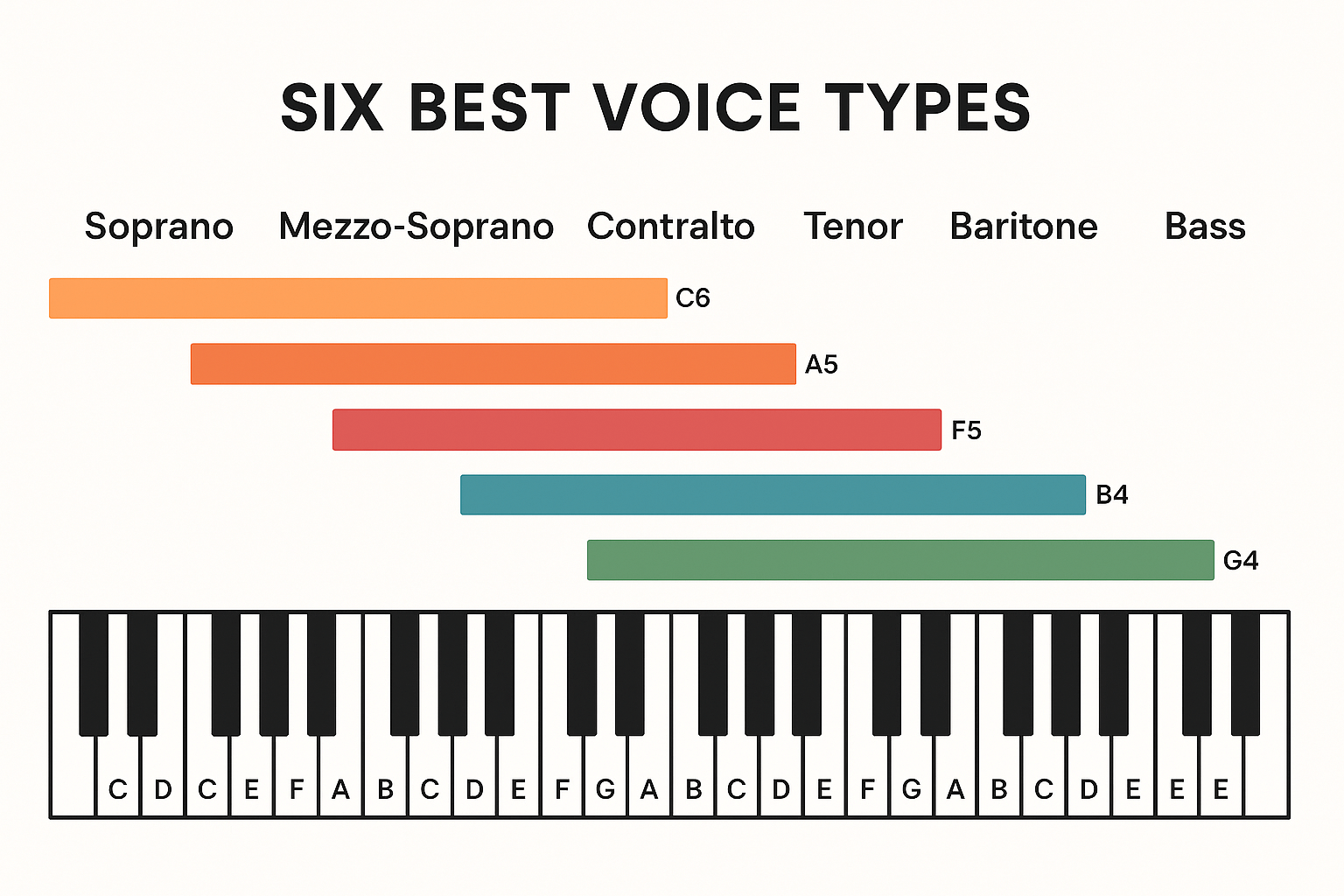
Think of vocal range as everything you can reach, and tessitura as where you can comfortably live.
How to Find Your Tessitura (Practical Method)
Instead of guessing, use this reliable approach:
- Sing simple songs or scales across your range
- Notice where your voice feels relaxed and stable
- Identify notes where tone stays consistent
- Pay attention to fatigue, not just pitch
- Repeat over several days, not one session
For accuracy, combine this with
how to find your vocal range
so you can see where tessitura sits inside your range.
Tessitura and Song Choice (Why Songs Feel “Too Hard”)
Many songs feel difficult not because of one high note, but because:
- Most of the melody sits outside your tessitura
- The song demands endurance where your voice is weakest
This also explains why changing the key sometimes helps—and sometimes doesn’t.
For practical application, see
songs for your vocal range.
Can Tessitura Change With Training?
Yes—but within limits.
Training can:
- Improve efficiency
- Expand comfort slightly higher or lower
- Reduce tension at tessitura edges
Training usually does not relocate your tessitura entirely.
It expands comfort around it.
Common Tessitura Misconceptions
Tessitura and vocal range are the same
If I can hit the note, it’s in my tessitura
Training should completely change my tessitura
Tessitura only matters in classical singing
All false.
Pop, rock, and contemporary singers suffer just as much—often more—when tessitura is ignored.
Tessitura and Vocal Health
Ignoring tessitura often leads to:
- Chronic vocal fatigue
- Throat tightness
- Pitch inconsistency
- Loss of confidence
Respecting tessitura:
- Reduces strain
- Improves tone naturally
- Builds endurance safely
This makes tessitura a vocal health issue, not just a theory concept.
FAQs: Tessitura Explained
1. What is tessitura in singing?
It’s the range where your voice sings most comfortably and consistently.
2. Is tessitura the same as vocal range?
No. Range is total notes; tessitura is your comfort zone.
3. Why does tessitura matter more than high notes?
Because most songs require endurance, not extremes.
4. Can tessitura change with training?
Slightly, but your core comfort zone remains similar.
5. How do I know my tessitura?
Observe comfort, tone, and fatigue across songs—not just scales.
6. Does tessitura determine voice type?
Yes. It’s one of the most important factors.
7. Can I sing outside my tessitura safely?
Occasionally yes. Regularly, it causes strain.
- To dive deeper into the concept, read this simple tessitura breakdown.
- Compare your comfort zone with the average vocal range guide.
- Learn how tone placement affects comfort in this chest vs head voice overview.
- If you sing lower notes, explore this male vocal range resource.
- Higher-range singers may benefit from this female vocal range guide.
- Check whether your flexibility is on track with this octave range evaluation.
- Protect your voice long-term with these practical vocal health tips.