
Paul McCartney’s vocal range spans roughly from A2 to B5 in his prime years, covering close to three octaves. He is generally described as a tenor or high baritone, known for powerful upper-mid belts, flexible mix, and expressive falsetto during his peak Beatles era.
That’s the technical summary.
What made his voice remarkable wasn’t just how high he could sing — it was how musically and emotionally he used that range.
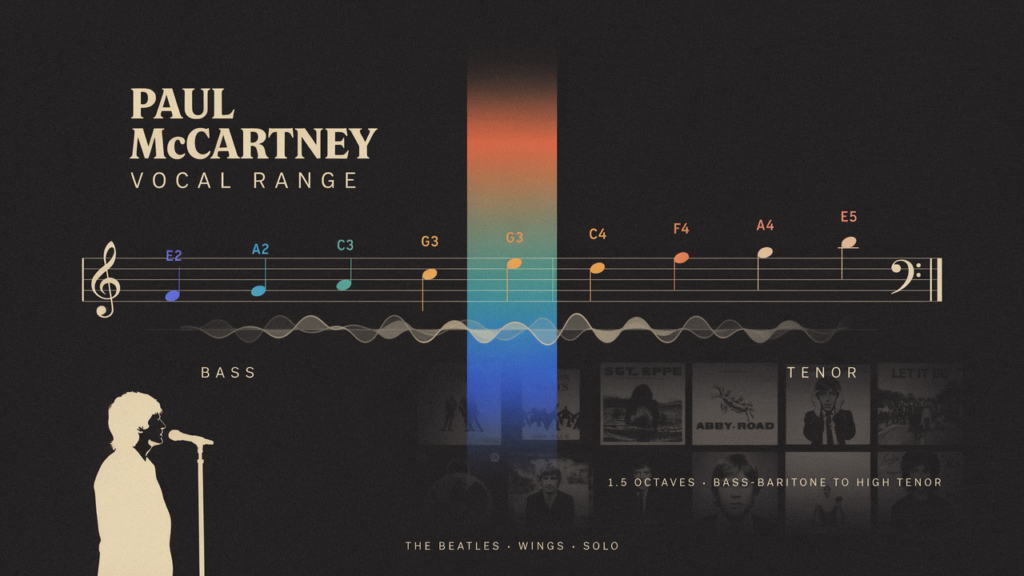
What Is Paul McCartney’s Lowest and Highest Note?
Most analyses place his lower notes around A2, with strong upper belts and mixed notes reaching up toward B5 in studio recordings.
His usable range — the notes he could consistently sing with control — sat mostly in the upper mid-range. That’s where his voice carried brightness and intensity.
To see how this compares structurally, look at the broader male vocal range explained.
Is Paul McCartney a Tenor or Baritone?
This debate appears often.
His speaking voice and upper register strength suggest tenor qualities. However, his tonal warmth and mid-range weight can resemble a high baritone.
Why Classification Isn’t Just About High Notes
Voice type depends on:
- Tessitura (comfort zone)
- Tone color
- Passaggio behavior
- Consistent range placement
If you want clarity on how classification works, review the full breakdown in a voice type guide.
Where His Tessitura Sits
McCartney’s tessitura during his prime years sat relatively high. He could sustain upper-mid notes with energy and clarity.
To better understand why tessitura matters more than extreme notes, read about tessitura explained.
How Wide Was His Range Compared to the Average Singer?
Here’s a simple perspective:
| Category | Typical Range |
|---|---|
| Untrained male | 1.5–2 octaves |
| Trained contemporary singer | 2–3 octaves |
| Advanced rock vocalist | 3 octaves or more |
| Extreme outlier | 4+ octaves |
McCartney sits comfortably in the trained-to-advanced category.
If you want to measure yourself objectively, check your own span against the average vocal range.
Early Beatles Era vs Later Career
Voices change over time.
During the early and mid-1960s, McCartney’s upper belts were brighter, freer, and more aggressive. Songs from that era show strong upper-mid stamina and flexible falsetto.
As he aged, the uppermost notes became less consistent. That’s normal. Vocal folds lose elasticity over decades.
Longevity in singing isn’t about keeping every high note forever. It’s about adapting intelligently.
Use the ear training tool to practice identifying isolated pitches.
How He Used Chest, Mix, and Falsetto
McCartney didn’t rely on one register.
Chest Voice Power
His rock belts often began in a strong chest foundation.
Mixed Coordination
As notes climbed, he blended chest and head coordination to avoid shouting.
Think of mix like shifting gears in a car. You don’t stay in first gear at highway speed.
Falsetto Flexibility
He also used falsetto for color and softness. Falsetto is not weakness — it’s a stylistic choice.
Understanding the difference between supported mix and falsetto is critical when analyzing rock singers.
Step-by-Step: Approaching His Upper Rock Style Safely
If you want to approach that Beatles-era intensity, follow this progression:
- Warm up in your mid-range for 10–15 minutes.
- Practice smooth ascending slides on comfortable vowels.
- Introduce moderate volume before full power.
- Narrow vowels slightly as you ascend.
- Stop if you feel throat tightness or hoarseness.
High rock notes should feel energized, not painful.
If your upper range feels unstable, structured vocal exercises to increase range can help build coordination gradually.
Common Mistakes When Trying to Sing Like Paul McCartney
- Forcing chest voice too high
- Shouting instead of mixing
- Ignoring breath control
- Skipping warm-ups
- Copying tone without technique
Many singers assume his rasp or grit came from strain. In reality, power comes from support first.
If your voice feels tight the next day, that’s a sign something needs adjustment.
Quick Self-Check: Is Your Range Similar?
Answer honestly:
- Can you comfortably sing between B2 and E4?
- Do upper-mid notes feel natural?
- Can you reach A4 or higher without pushing?
- Does your tone stay bright as you ascend?
If yes, you may sit in tenor or high baritone territory.
To test precisely, use a vocal range calculator to see your real numbers.
Realistic Expectations About Expanding Upward
Most singers gain a few semitones over several months of consistent training.
Range development is gradual. The vocal folds are small muscles that adapt slowly.
Trying to jump half an octave in a few weeks often leads to fatigue or temporary swelling.
Train patiently. Rest adequately. Hydrate consistently.
Can You Sing Beatles Songs Comfortably?
It depends on your tessitura.
Many Beatles songs sit higher than casual singers expect. If choruses feel strained, lowering the key by one or two semitones is completely acceptable.
Professional performers transpose songs regularly.
If you’re unsure whether you lean tenor or baritone, review the tenor vocal range and compare it carefully to your own.
Why His Voice Felt So Powerful
It wasn’t just pitch.
It was:
- Clear articulation
- Controlled vibrato
- Confident phrasing
- Emotional commitment
- Efficient breath use
He balanced intensity with musicality.
Imagine projecting your voice forward rather than pushing it upward. That shift in focus changes everything.
Final Coaching Perspective
Paul McCartney’s vocal range covered close to three octaves in his prime, with strong upper-mid belts and expressive falsetto.
But his real strength was adaptability and musical intelligence.
Build coordination before volume. Strengthen mix before chasing extreme highs. Protect your voice long-term.
That’s how you develop range that lasts.
FAQs
1. What is Paul McCartney’s highest note?
In his prime, he reached upper notes around B5 in studio recordings. His most consistent high range lived slightly below that.
2. What is Paul McCartney’s lowest note?
His lower extension reaches approximately A2. Most of his songs sit well above that range.
3. How many octaves can Paul McCartney sing?
He covered close to three octaves during his peak years. That places him in the advanced category for rock vocalists.
4. Is Paul McCartney a tenor?
He is generally considered a tenor or high baritone. His high tessitura and bright upper range lean toward tenor characteristics.
5. Did Paul McCartney lose range over time?
Like most singers, his upper range became less consistent with age. This is a natural part of vocal aging.
6. Does Paul McCartney use falsetto?
Yes. He used falsetto for stylistic color and emotional contrast, especially in softer passages.
7. Is a three-octave range impressive?
Yes. Three octaves is strong for contemporary singers. Control and healthy technique matter more than extreme span.

Cooke is a vocal training and singing education writer specializing in vocal range analysis, pitch recognition, voice development, and singing tools for vocalists, performers, musicians, and beginners. He creates practical content focused on vocal improvement, singing techniques, and voice analysis resources.