
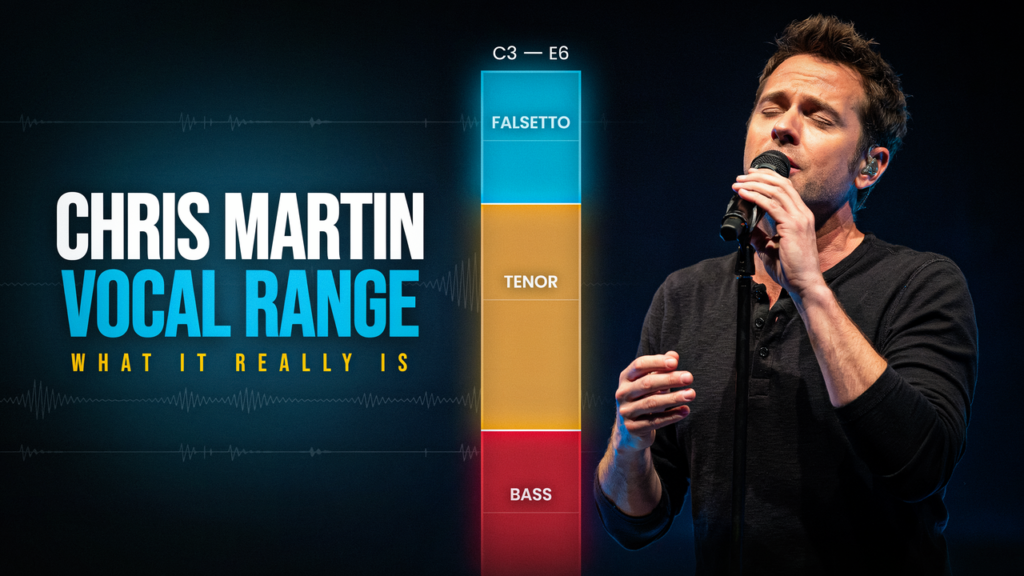
Chris Martin’s vocal range spans approximately B2 to E5, covering about two and a half to three octaves depending on how falsetto is counted. He is generally considered a tenor, with a light timbre and frequent use of head voice and falsetto to access higher notes in Coldplay’s catalog.
That definition gives you the numbers. Now let’s understand what they actually mean.
What Is Chris Martin’s Vocal Range in Practice?
Most documented analyses place his lowest recorded notes around B2 and his highest sustained notes around E5. He occasionally reaches higher pitches in falsetto, but his strong, usable singing range sits lower than that extreme.
This distinction matters.
A singer’s total span includes every reachable note. But their tessitura—the most comfortable and repeatable zone—is where the real voice lives. If that concept is new to you, review what is tessitura before comparing ranges.
Chris Martin’s tessitura often centers around the upper third and fourth octaves, which gives his melodies their floating, emotional quality.
Is Chris Martin a Tenor or Baritone?
He is widely classified as a tenor.
Why He’s Considered a Tenor
- Natural speaking voice sits moderately high
- Passaggio occurs in a tenor-typical area
- Upper melodies are comfortable and frequent
- Tone is lighter rather than heavy
If you’re unsure how tenor characteristics compare to others, you can explore the differences in male vocal range.
He does not have the darker weight typically associated with baritones. Instead, his strength lies in clarity and upper-register flexibility.
How He Uses Falsetto and Head Voice
One of the most important things to understand about Chris Martin’s range is how often he uses falsetto.
Falsetto is not “fake singing.” It’s a legitimate register. But it feels and functions differently from chest-dominant notes.
When listening to songs like Fix You or A Sky Full of Stars, you’ll hear:
- Light, breathy upper phrases
- Smooth transitions into head voice
- Sustained emotional high notes without shouting
To understand this coordination better, study the difference between chest voice vs head voice.
His high notes are rarely brute-force belts. They’re balanced.
Range vs Usable Range
Many singers ask, “How many octaves does he have?”
The answer depends on how you count.
If you include falsetto peaks, he may approach three octaves. But his strong, modal (full voice) range is narrower.
Here’s a simplified breakdown:
| Category | Approximate Notes |
|---|---|
| Lowest recorded note | B2 |
| Strong modal high note | Around D5–E5 |
| Occasional falsetto peaks | Slightly above E5 |
| Comfortable tessitura | E3–C5 |
Understanding this helps you avoid unrealistic comparisons. If you want to measure yourself accurately, try using a vocal range calculator to map your own span first.
What Makes His Voice Distinct
Chris Martin’s vocal power doesn’t come from extreme height.
It comes from:
- Emotional phrasing
- Controlled breath flow
- Clear vowel shaping
- Smooth register transitions
Think of his voice like a violin rather than a trumpet. It’s expressive and lyrical, not aggressively loud.
This is important for singers who assume high notes must be shouted.
The pitch analyzer is helpful for checking notes during warm-ups.
Step-by-Step: How to Develop a Similar Upper Range
If you want to build a similar floating high register, follow this progression carefully.
1. Strengthen Your Mid-Range First
Most range problems start in the middle.
If your E4–G4 area feels unstable, high notes won’t stabilize either. Build consistency there before pushing upward. If you struggle in this zone, review how to sing higher notes and focus on coordination rather than volume.
2. Develop Clean Head Voice
Head voice should feel lifted and easy—not squeezed.
Practice sliding gently from mid-range into lighter tones without flipping abruptly.
3. Blend Through the Break
The passaggio is where voices crack.
Instead of pushing chest voice higher, allow some head coordination to mix in. Think of dimming a light gradually instead of flipping a switch.
4. Increase Volume Slowly
Never build intensity before stability.
Add dynamic power only when the note feels balanced and repeatable.
5. Prioritize Recovery
If you feel soreness the next day, you’ve pushed too hard.
Healthy training feels like muscular work—not throat pain.
Are You Forcing High Notes?
Ask yourself:
- Do my shoulders lift when I sing high?
- Does my jaw tighten?
- Do I feel pressure in my throat?
- Can I repeat the note tomorrow comfortably?
If the answer is yes to tension and no to recovery, reduce volume and rebuild technique. You can objectively test your limits with an octave range test rather than guessing.
Common Mistakes When Comparing Yourself to Chris Martin
Mistake 1: Counting Falsetto as Full Voice
Falsetto expands total range, but it doesn’t mean you can belt those notes.
Mistake 2: Yelling Instead of Mixing
Trying to power through the break leads to strain. Light coordination works better than force.
Mistake 3: Ignoring Vocal Type
If you’re a natural baritone, your tessitura will feel different. Comparing without context creates frustration. Review a general vocal range chart to understand your category.
Mistake 4: Chasing Numbers
Octaves don’t equal artistry. Emotional control and phrasing matter more.
Realistic Expectations
Most male singers have a comfortable range of about two octaves.
If you’re within that zone, you’re normal. Expanding safely takes months or years—not weeks.
If you’re unsure what’s typical, review average vocal range before assuming you’re limited.
Chris Martin’s consistency, not just his height, is what makes his singing effective.
What Singers Can Learn From Him
The biggest lesson is this:
He doesn’t fight his voice.
He leans into lightness when needed. He doesn’t oversing. He lets tone carry emotion instead of volume.
If you want to train smartly, focus on coordination before intensity. Explore structured practice ideas in best singing exercises to strengthen your foundation.
Range expands as a byproduct of balance.
Final Coaching Perspective
Chris Martin’s vocal range sits roughly between B2 and E5, with frequent use of head voice and falsetto. He is best classified as a tenor with a light, flexible upper register.
But what defines his sound isn’t extreme notes.
It’s control, phrasing, and consistency.
Build those first—and your range will grow naturally.
FAQs
1. What is Chris Martin’s highest note?
His strongest sustained notes reach around E5. He may touch slightly higher notes in falsetto, but E5 is a reliable upper benchmark.
2. How many octaves can Chris Martin sing?
Including falsetto, roughly two and a half to three octaves. His strong modal range is narrower than that full span.
3. Is Chris Martin a tenor?
Yes, he is generally considered a tenor based on tessitura, tone quality, and passaggio placement.
4. Does he belt high notes?
Rarely in a heavy way. He relies more on head voice and balanced mix than aggressive belting.
5. Can I train to sing like him?
You can develop similar coordination, but your anatomy determines your ultimate limits. Focus on balance rather than imitation.
6. Does falsetto count as vocal range?
Yes, it counts in total range measurements. However, it functions differently than full modal voice.
7. Why does his voice sound so effortless?
Because he avoids pushing. Efficient breath support and relaxed transitions make high notes feel smooth instead of forced.

Cooke is a vocal training and singing education writer specializing in vocal range analysis, pitch recognition, voice development, and singing tools for vocalists, performers, musicians, and beginners. He creates practical content focused on vocal improvement, singing techniques, and voice analysis resources.