
Tim Foust’s vocal range is widely recognized for extending from deep bass notes in the lower second octave down into extreme subharmonic territory, while also reaching upward into baritone notes. He is often described as a bass or basso profundo known for producing exceptionally low frequencies with strong resonance and advanced technique.
What makes his voice impressive is not just how low it goes, but how controlled and usable those notes are.
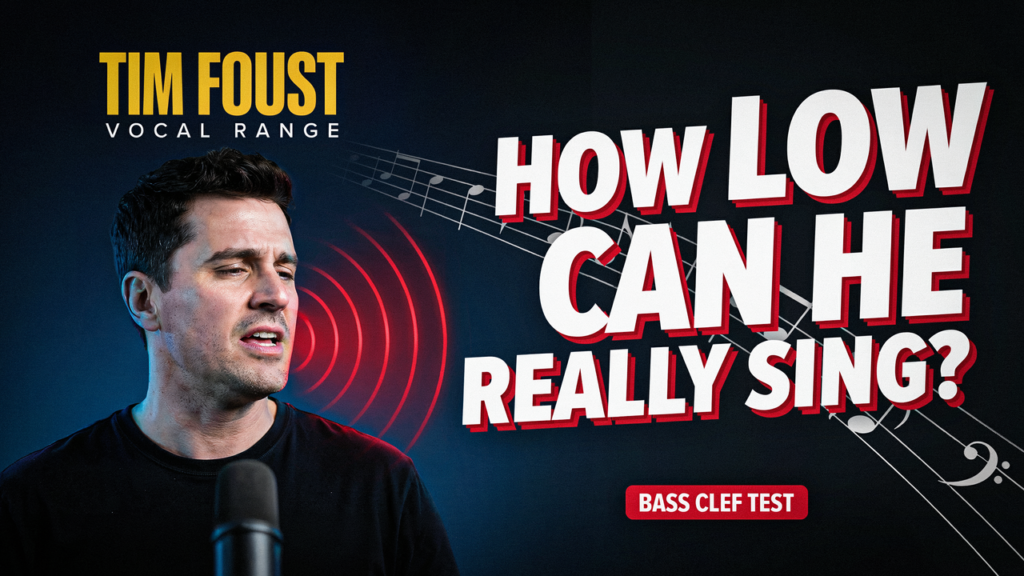
What Is Tim Foust’s Vocal Range?
Tim Foust is known for singing comfortably in the low bass register and occasionally producing notes that drop below standard bass range using subharmonic techniques.
In simple terms:
- His natural chest voice sits deep in the bass range.
- He can extend below that using subharmonics.
- He can also sing higher into baritone territory when needed.
To understand how unusual this is, compare his depth to a typical bass vocal range. Most bass singers do not comfortably access subharmonic frequencies.
If you want broader context, reviewing the standard male vocal range helps clarify how rare these depths are.
Natural Low Notes vs Subharmonics
This distinction is critical.
Many online discussions confuse extremely low subharmonics with natural chest voice notes.
Natural Chest Voice
This is produced with normal vocal fold vibration.
The tone feels grounded, stable, and resonant.
Subharmonics
Subharmonics involve a secondary vibration pattern that creates the perception of pitches below the normal fundamental frequency.
Think of it like adding a lower shadow beneath the main note.
These notes are real and measurable, but they are produced differently than standard bass phonation.
If you’re curious how your own low notes compare, you can experiment safely with a structured low note test.
Is Tim Foust a Basso Profundo?
He is frequently described as a basso profundo because of his depth and resonance.
A true basso profundo typically has:
- Very low tessitura
- Dark tonal color
- Strong resonance in the lower second octave
- Stability in deep sustained notes
If you want to understand how this classification fits into the bigger picture, reviewing the full human vocal range helps clarify how extreme these notes are compared to average voices.
What separates Tim Foust from many bass singers is not just range, but the power and clarity he maintains at low frequencies.
How Tim Foust Produces Extremely Low Notes
Low singing is not about pushing downward.
It’s about resonance and coordination.
Imagine a large cathedral pipe organ.
The size of the pipe determines the depth of the sound.
In the human voice, we can’t change the size of our anatomy, but we can optimize resonance space and airflow.
Key Elements of His Low Production
- Relaxed laryngeal position
- Stable breath support
- Deep resonance focus
- Efficient airflow without forcing
Subharmonics require even more control. They rely on balanced airflow and vocal fold interaction.
Never try to “force” your voice lower. That leads to tension and instability.
Try the vocal span tool as part of your daily log.
Developing a Strong Low Register Safely
If you want to explore lower notes, approach it gradually.
1. Stabilize Your Speaking Voice
Your lowest singing notes should feel similar to a relaxed speaking tone.
If your throat tightens, you’re pushing.
2. Use Gentle Descending Slides
Start in a comfortable middle note and glide downward slowly.
Maintain steady airflow.
Avoid collapsing posture.
3. Keep Volume Moderate
Low notes don’t require high volume.
In fact, yelling downward usually kills resonance.
4. Build Endurance Gradually
Practice short low phrases first.
Increase duration only after consistency feels easy.
If you’re unsure of your overall span, use a structured vocal range calculator to measure progress objectively.
Subharmonics: Should You Practice Them?
Subharmonics are advanced techniques.
They can be safe when developed slowly, but forcing them can irritate the vocal folds.
Think of them like weightlifting.
You wouldn’t attempt your maximum lift without training.
If your voice feels scratchy or fatigued afterward, stop immediately.
Low-range development should never cause soreness.
Range vs Tessitura
Many singers focus on extreme notes.
But tessitura — your comfortable singing zone — matters more.
Tim Foust’s strength lies in how easily he sustains deep bass notes repeatedly in performance.
If you’re unsure where your voice naturally sits, exploring voice types through a voice type test can provide clarity.
Comparison Table: Natural Bass vs Subharmonic Extension
| Feature | Natural Bass Note | Subharmonic Note |
|---|---|---|
| Produced by | Normal vocal fold vibration | Modified vibration pattern |
| Tone Quality | Clear and resonant | Extra depth, layered effect |
| Ease of Production | Stable with training | Advanced coordination required |
| Sustainability | Repeatable | Limited duration for most singers |
Understanding this difference prevents unrealistic expectations.
Is Your Low Singing Healthy?
Ask yourself:
- Does my throat stay relaxed?
- Can I sustain the note without shaking?
- Does my speaking voice feel normal afterward?
- Am I forcing volume to get lower?
If your voice feels tight or dry, you’re likely pushing too hard.
Healthy low singing feels grounded and stable, not strained.
Common Mistakes When Trying to Sing Extremely Low
Forcing the Larynx Down
Trying to “push” the voice lower creates tension and reduces resonance.
Confusing Vocal Fry With Low Singing
Vocal fry is a crackly coordination, not a full bass tone.
Overtraining Subharmonics
They require recovery time.
Ignoring Overall Range Balance
A strong low register should not come at the expense of your upper range.
If you’re working on full-range development, follow balanced exercises from a guide on how to extend vocal range instead of focusing only downward.
For visual reference, compare where your lowest note sits on a vocal range chart to see how it fits musically.
Realistic Expectations for Bass Singers
Most male singers comfortably reach into the lower second octave.
Only a small percentage can naturally produce stable notes significantly below that.
Subharmonics are even rarer and require careful conditioning.
Your goal should be usable, repeatable depth — not chasing extremes for novelty.
Longevity matters more than impressing people once.
What Makes Tim Foust’s Voice Special
It’s not just how low he sings.
It’s the clarity, stability, and resonance he maintains in those depths.
Low frequencies can easily become muddy or breathy.
He keeps them focused and controlled.
That level of consistency is what separates rare bass voices from gimmicks.
Final Coaching Takeaway
Tim Foust’s vocal range is extraordinary because it combines natural bass depth with advanced subharmonic extension.
But remember:
Range is partly genetic.
Control is trained.
Focus on resonance, relaxation, and repeatability.
Develop your low register gradually and safely.
That’s how you build real bass power.
FAQs
1. What is Tim Foust’s lowest note?
He is known for producing extremely low bass notes, including subharmonic tones below standard bass range. Exact note claims vary, but his depth clearly extends into rare territory.
2. How many octaves can Tim Foust sing?
His overall span is estimated to cover multiple octaves, from deep bass into baritone territory. What stands out most is the lower extension.
3. Is Tim Foust a true basso profundo?
He is often described that way due to his deep tessitura and resonance. His sustained low notes fit many characteristics of the classification.
4. Are Tim Foust’s lowest notes natural?
Some are natural chest voice bass notes, while others are produced using subharmonic techniques that create additional depth.
5. Can I train to sing as low as Tim Foust?
You can strengthen your lower range, but extreme depth is partly anatomical. Focus on improving resonance and stability rather than forcing pitch downward.
6. Are subharmonics safe to practice?
They can be safe when approached gradually and without tension. Stop immediately if you experience discomfort or fatigue.
7. How rare is a voice like Tim Foust’s?
Extremely low, controlled bass voices are uncommon. Combining natural depth with usable subharmonic extension makes his voice especially rare.

Cooke is a vocal training and singing education writer specializing in vocal range analysis, pitch recognition, voice development, and singing tools for vocalists, performers, musicians, and beginners. He creates practical content focused on vocal improvement, singing techniques, and voice analysis resources.