
Yes, whispering uses the vocal cords, but they don’t vibrate normally. Instead, they stay slightly open while air passes through. Whispering can strain the voice if done often, so soft, relaxed speech is usually safer for vocal health.
Whispering does use the vocal cords. They are engaged in a different way than normal speech, and that difference is exactly why whispering can be more fatiguing and irritating than gentle talking, especially if your voice is already hoarse.
People whisper when their voice feels tired, sore, or hoarse because it seems gentler. Teachers, singers, parents, and anyone with a cold often assume whispering equals vocal rest.
Understanding what actually happens to your vocal cords when you whisper explains why voice specialists often recommend soft speech or silence instead.
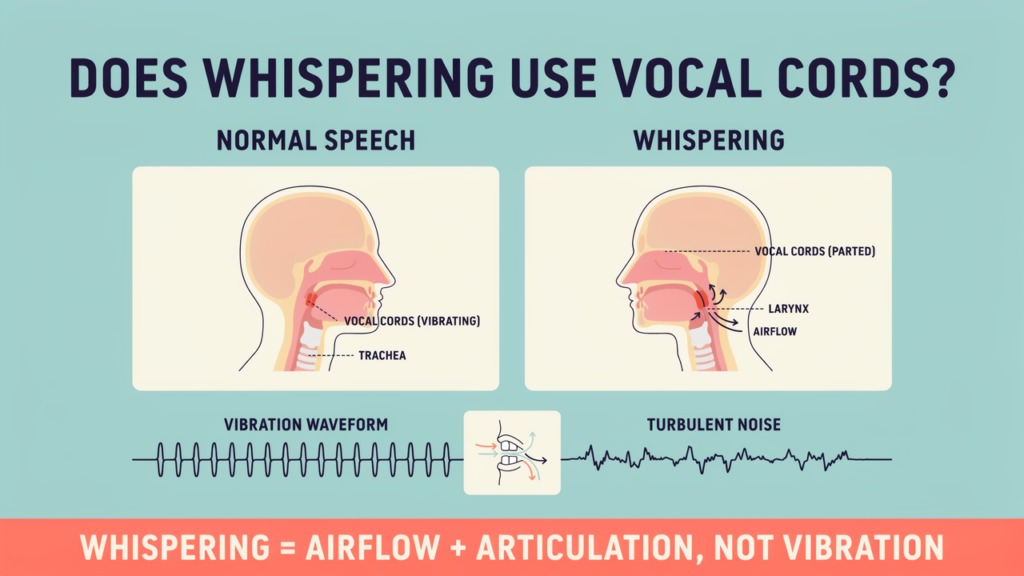
What the Vocal Cords Do in Normal Speech
In normal speaking or singing:
- The vocal cords (vocal folds) come together
- Air from the lungs sets them into regular vibration
- Sound is produced efficiently
- Resonance amplifies the sound with relatively little effort
This efficient vibration is what allows you to speak for long periods without discomfort—when done gently.
Test your singing voice to learn your real range.
What Happens to the Vocal Cords When You Whisper
When you whisper, the vocal cords behave very differently:
- They do not vibrate normally
- They remain slightly apart
- The back portion of the cords stays open
- Air rushes through a small gap, creating turbulent noise instead of tone
So yes, the vocal cords are actively involved, but in an inefficient configuration.
Why Whispering Can Strain Your Voice
Because whispering relies on turbulent airflow rather than vibration, it often causes:
- Increased airflow pressure
- Drying of the vocal cord surface
- Extra tension in the throat muscles
- A scratchy or burning sensation
Over time, this can lead to more fatigue, not less.
This is why many people notice that whispering for several minutes actually makes their throat feel worse.
Use the pure tone generator to check intonation by ear.
Is Whispering Worse Than Talking?
In many cases, yes—especially when the voice is already irritated.
Gentle speaking:
- Uses efficient vibration
- Requires less air
- Maintains vocal fold hydration
Whispering:
- Uses excessive airflow
- Increases friction
- Encourages throat tension
A soft, relaxed speaking voice is usually safer than whispering.
Does Whispering Damage the Vocal Cords?
Occasional whispering for a short time is unlikely to cause permanent damage. However:
- Prolonged whispering
- Loud whispering
- Whispering with a hoarse voice
can delay recovery and worsen irritation.
This is especially relevant for:
- Singers
- Teachers
- Public speakers
- Children who whisper for long periods
Is Whispering Vocal Rest?
No.
True vocal rest means:
- Minimal or no vocal cord use
- Silence, not whispering
- Allowing inflammation to reduce
Whispering still requires:
- Active laryngeal muscle engagement
- Continuous airflow
- Sustained tension
That is not rest.
What to Do Instead of Whispering
If your voice is tired or hoarse, better options include:
1. Use Gentle Speech
- Speak softly but clearly
- Avoid pushing or projecting
- Keep sentences short
2. Take Real Vocal Breaks
- Choose silence when possible
- Communicate via text or notes
- Rest between speaking tasks
3. Stay Hydrated
- Drink water regularly
- Avoid caffeine and alcohol when possible
- Use humid air if available
4. Reduce Throat Clearing
- Swallow or sip water instead
- Throat clearing is more abrasive than whispering
Why Whispering Feels “Easier” at First
Whispering can feel easier because:
- You’re not hearing full vocal tone
- There’s less vibration sensation
- The sound seems quieter
But sensation is misleading. The mechanical load on the vocal cords is often higher.
Common Myths About Whispering
“Whispering doesn’t use vocal cords.”
It does—just inefficiently.
“Whispering rests your voice.”
It often increases strain.
“Whispering is safer when hoarse.”
Gentle speech or silence is safer.
“Kids should whisper to protect their voices.”
Children often whisper loudly, which is especially fatiguing.
Whispering and Illness (Colds, Laryngitis)
During illness, the vocal cords may be:
- Swollen
- Dry
- Less flexible
In this state, whispering:
- Increases airflow irritation
- Slows healing
- Encourages compensatory tension
Medical and voice professionals typically recommend voice rest or soft speech, not whispering.
A Simple Rule of Thumb
If you can say it gently, say it gently.
If you can avoid saying it, don’t say it at all.
Whispering should be a last resort, not a default strategy.
When Whispering Might Be Briefly Acceptable
There are limited situations where brief whispering is unlikely to be harmful:
- A few words for safety or urgency
- Very short, infrequent use
- No hoarseness or pain present
But it should not replace healthy voice use.
Final Verdict
Yes, whispering uses the vocal cords—and often in a way that increases strain. While it sounds gentle, whispering relies on inefficient airflow and tension that can worsen vocal fatigue, especially when the voice is already irritated.
Related Articles:
- Understanding vocal airflow helps clarify this topic when learning how vocal cords work.
- Protecting long-term voice health becomes easier after reading whether whispering strains your voice.
- Avoiding common misconceptions about soft speech is supported by reviewing vocal range myths.
- Reducing vocal fatigue can be improved with a consistent daily vocal warm-up.
- Maintaining efficient sound production starts with best posture for singing.
- Strengthening overall vocal control pairs well with practicing best singing exercises.
- Building healthier vocal habits over time can be supported through vocal exercises to increase range.

Cooke is a vocal training and singing education writer specializing in vocal range analysis, pitch recognition, voice development, and singing tools for vocalists, performers, musicians, and beginners. He creates practical content focused on vocal improvement, singing techniques, and voice analysis resources.